
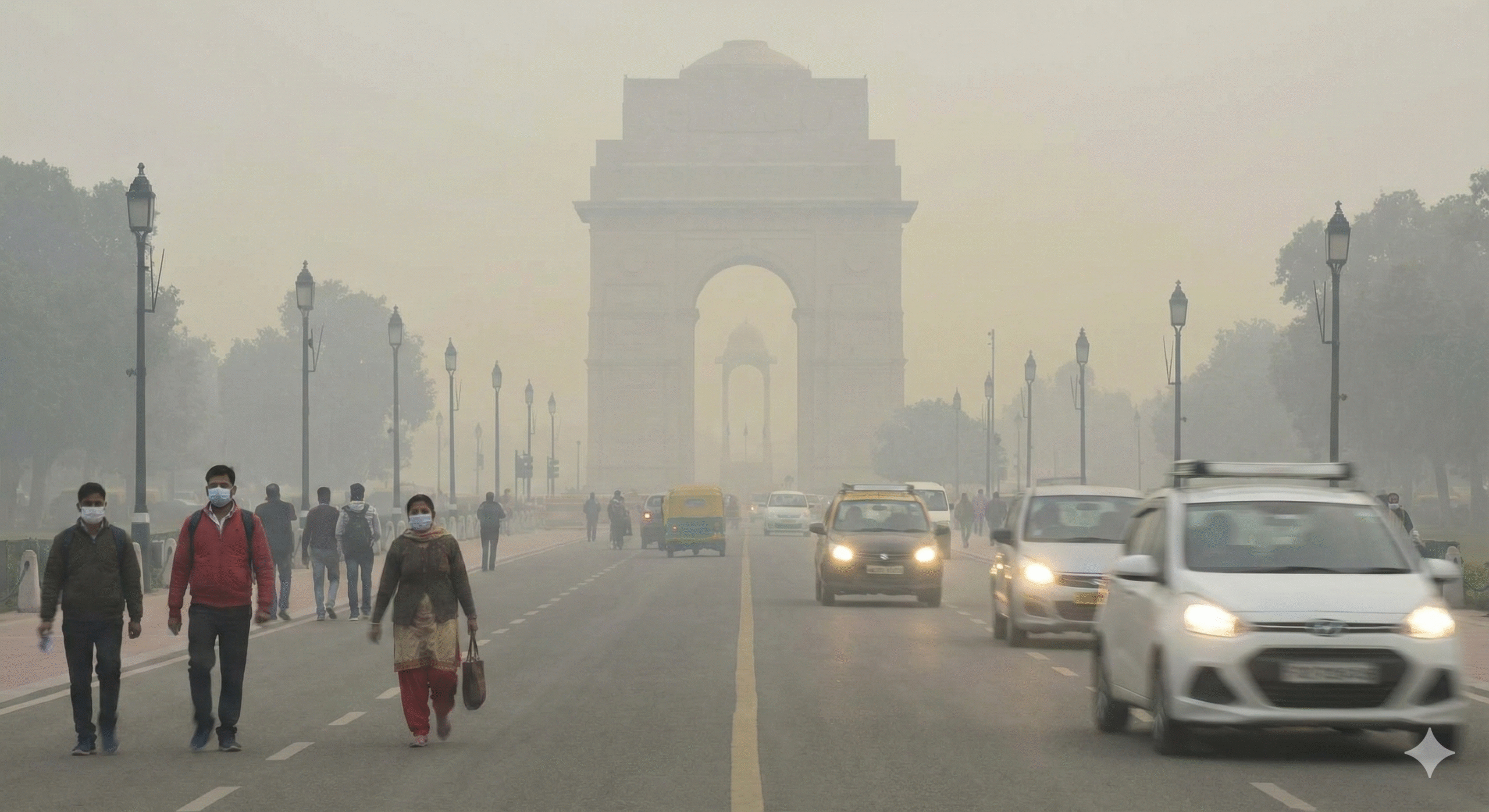
Introduction: The Annual Haze Returns
The return of the winter chill in Delhi-NCR brings with it an unwelcome annual visitor: the suffocating haze of severe air pollution. As the Air Quality Index (AQI) surges into the ‘Severe’ and sometimes ‘Hazardous’ categories, the Commission for Air Quality Management (CAQM) has been forced to invoke the most stringent emergency measures under the Graded Response Action Plan (GRAP).
This is more than just bad weather; it’s a public health crisis that stops traffic, closes schools, and affects the daily lives of millions. Below is your essential guide to understanding the current crisis, the emergency measures in force, and how to protect your family today.
What is the Current Status? (GRAP Stage III & IV)
The current air quality has triggered the most restrictive phases of the Graded Response Action Plan (GRAP), specifically Stage III (Severe) and in some areas, Stage IV (Severe Plus).
Key SEO Keywords:
- Primary: Delhi Air Pollution, GRAP-IV, AQI Delhi Today
- Secondary: CAQM, Air Quality Index, PM2.5, Stubble Burning, Delhi-NCR Pollution
🛑 GRAP-IV Curbs: What is Banned and Restricted Right Now?
The implementation of GRAP Stage IV (and III) brings immediate, non-negotiable restrictions across the National Capital Region (NCR).
| Category | GRAP Stage III (Severe) Restriction | GRAP Stage IV (Severe Plus) Restriction |
| Construction & Demolition | Complete ban on all non-essential C&D activities. | The ban is further enforced; even exemptions for linear public projects (highways, etc.) are lifted. |
| Vehicles (Transport) | Ban on the plying of BS-III Petrol and BS-IV Diesellight motor vehicles (four-wheelers) in Delhi and NCR districts. | Entry of all non-essential trucks into Delhi is prohibited (except CNG/Electric/Essential Goods). |
| Education | Classes for students up to Grade 5 are mandatorily shifted to hybrid or online mode. | State governments may consider closing colleges and other educational institutions entirely. |
| Workplace | Government and Private offices are directed to operate with 50% staff from home/office. | All government and private offices are required to operate with 50% staff in-office (stronger enforcement). |
| Industrial Activity | Stricter action against polluting industries; non-compliant units are shut down. | Ban on the use of coal and wood for industrial, commercial, and residential heating purposes. |
Pro Tip: Before planning your day, always check the latest AQI (Air Quality Index) for your specific location in Delhi-NCR. An AQI above 450 is officially classified as ‘Severe Plus.’
🌬️ The Core Contributors to Delhi’s ‘Airpocalypse’
To understand the crisis, we must look beyond the immediate weather conditions. Multiple factors contribute to the high concentrations of PM2.5 (fine particulate matter that enters the bloodstream) and PM10:
- Stubble Burning (Seasonal): The agricultural practice in neighboring states (Punjab, Haryana) remains a major contributor in the late autumn/early winter months, pushing smoke and particulate matter into the NCR.
- Vehicular Emissions: Despite mandates for BS-VI standards, the sheer volume of old and new vehicles on Delhi roads, combined with poor traffic management, releases a constant stream of pollutants.
- Construction Dust: Even with the current ban, dust from ongoing and previous construction/demolition activities remains a major source of PM10 and PM2.5.
- Adverse Meteorology: During winter, lower wind speeds and a phenomenon called “Temperature Inversion”trap pollutants close to the ground, preventing dispersal.
⚕️ Protecting Your Health: A Survival Checklist
The health impacts of the Delhi Air Pollution Crisis are severe, ranging from immediate throat irritation to long-term chronic respiratory and cardiovascular diseases.
- Invest in an Air Purifier: This is now a necessity, not a luxury. Ensure it has a True HEPA filter for effective PM2.5 removal.
- Use N95/KN95 Masks: Ordinary cloth or surgical masks offer little protection. Use a certified respirator mask when stepping out, especially during peak pollution hours (early morning and late evening).
- Avoid Outdoor Exercise: Cancel or move any strenuous outdoor activities (running, cycling) indoors. Your lungs breathe in 10-20 times more air during exercise, multiplying your exposure to pollutants.
- Check the AQI App: Get into the habit of checking the AQI before leaving home. Use apps that show real-time PM2.5 levels.
Conclusion: Beyond the Band-Aid Solutions
While the GRAP measures provide temporary relief and a necessary halt to immediate pollution sources, many experts argue that Delhi’s air pollution needs long-term, systemic solutions. This means better integration of public transport, robust regional coordination on stubble burning, and strict, year-round enforcement of industrial and waste disposal norms.
The fight for clean air is ongoing, and awareness remains the first step toward change.