
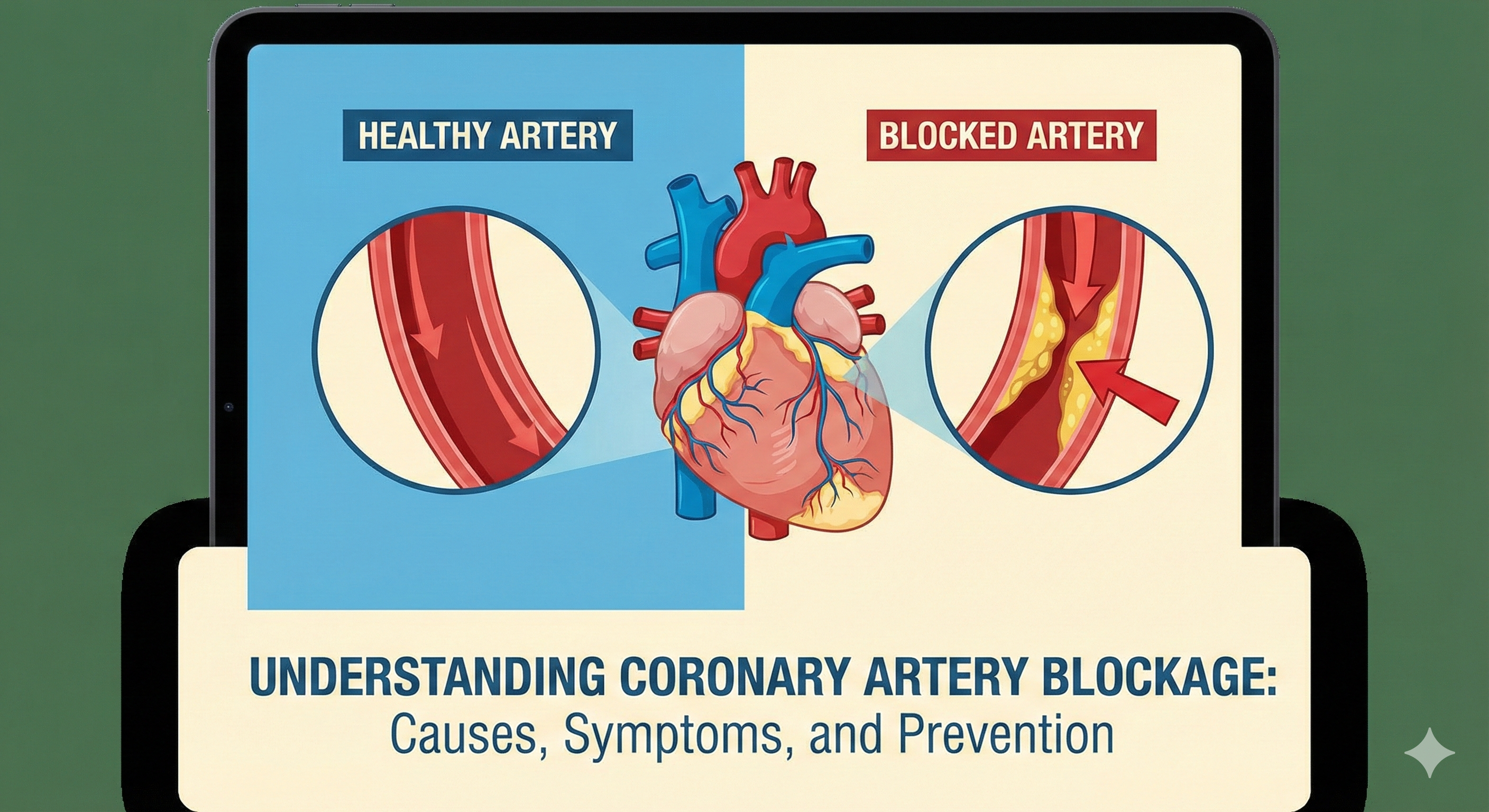
A heart attack, medically known as myocardial infarction, is one of the leading causes of death worldwide. Understanding how a heart attack occurs and how heart arteries get blocked can help people take timely preventive action and save lives. This article explains the process in a simple, medically accurate, and SEO‑friendly way.
What Is a Heart Attack?A heart attack occurs when the blood flow to a part of the heart muscle is suddenly blocked, depriving it of oxygen. If blood flow is not restored quickly, the affected heart muscle starts to die.The most common reason behind a heart attack is blocked coronary arteries, which supply oxygen‑rich blood to the heart.
What Are Coronary Arteries?Coronary arteries are blood vessels that wrap around the heart and deliver oxygen and nutrients to the heart muscle. There are two main coronary arteries:
Left coronary arteryRight coronary artery
How Do Heart Arteries Get Blocked?1. Cholesterol Buildup (Atherosclerosis)The most common cause of artery blockage is atherosclerosis, a condition where fatty deposits called plaque build up inside the artery walls.Plaque is made of:
Bad cholesterol (LDL)FatCalciumWaste products from cells
2. Plaque Rupture and Blood Clot FormationA heart attack often does not happen due to slow blockage alone.
A plaque can suddenly ruptureThe body treats it like an injuryA blood clot (thrombus) forms at that spotThe clot can completely block the artery
3. Inflammation Inside ArteriesChronic inflammation caused by:
SmokingAir pollutionObesityDiabetesStress
Step‑by‑Step: How a Heart Attack Occurs
Cholesterol plaque builds up in coronary arteriesArtery becomes narrowPlaque ruptures suddenlyBlood clot formsBlood flow stopsHeart muscle lacks oxygenHeart muscle damage or death begins
Common Symptoms of a Heart AttackSymptoms may vary, but common signs include:
Chest pain or pressure (often left side)Pain spreading to arm, jaw, neck, or backShortness of breathCold sweatNausea or vomitingSudden fatigueDizziness or light‑headedness
Silent Heart AttacksSome heart attacks occur without obvious symptoms. These are called silent heart attacks, more common in:
DiabeticsElderly peoplePeople with high pain tolerance
Major Risk Factors for Heart Artery Blockage
High LDL cholesterolSmoking or vapingHigh blood pressureDiabetesObesityPhysical inactivityChronic stressPoor diet (high sugar & trans fats)Air pollution exposure
How to Prevent Heart Artery BlockageLifestyle Changes
Quit smokingExercise at least 30 minutes dailyEat a heart‑healthy diet (fruits, vegetables, whole grains)Reduce sugar and fried foodMaintain healthy weightManage stressSleep 7–8 hours daily
Medical Prevention
Regular cholesterol checkBlood pressure monitoringDiabetes controlDoctor‑prescribed medicines (if needed)
Can Blocked Arteries Be Reversed?Early blockage can be slowed or partially reversed with:
Diet improvementRegular exerciseWeight lossMedications
AngioplastyStent placementBypass surgery